The honest answer is that some homes here do and some don’t. Here’s how to tell which one you have.
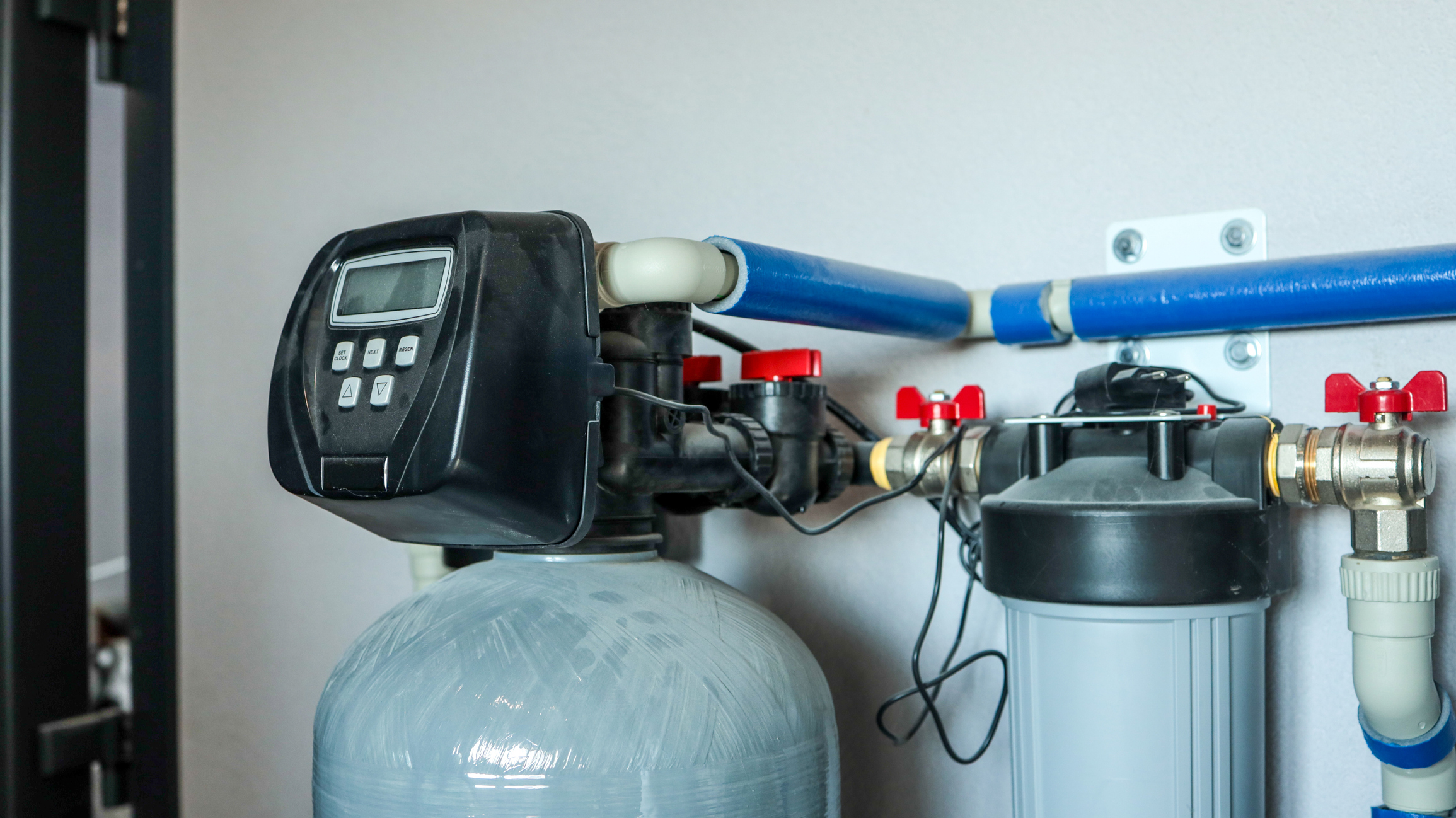
Short answer: A whole-house water filtration system treats water where it enters your home, so every faucet, shower, and appliance gets treated water instead of just the one tap under your kitchen sink. Whole-home systems from Family Water Treatment start at $2,995, or $3,595 with reverse osmosis for drinking water, including equipment, standard installation, whole-home softening and chemical filtration, and automatic salt monitoring. It’s usually the right call if you have chlorine taste or odor throughout the house, hard water scale, visible sediment, or well water. It’s usually the wrong call if your only complaint is drinking water taste, or if you rent.
Everything below expands on that.
What Does a Whole-House Water Filter Actually Remove?
It depends on the filtration media, but for most Middle Tennessee municipal supplies the practical targets are chlorine and the disinfection byproducts that come with it.
Here’s why that pairing matters locally. Our municipal water is surface water, drawn from rivers and reservoirs like the East Fork of the Stones River and J. Percy Priest Lake. Surface water carries organic matter. When chlorine disinfectant meets organic matter, it forms byproducts, primarily trihalomethanes and haloacetic acids. Activated carbon filtration and reverse osmosis are the standard treatments for that group.
Testing compiled by the Environmental Working Group shows these byproducts present in Middle Tennessee utilities at levels above EWG’s health guidelines, while those same utilities are in compliance with federal drinking water standards. Both of those statements are true at once, because they’re different benchmarks. EWG guidelines are stricter than federal legal limits, and the federal limits haven’t been updated in roughly two decades.
What a whole-house system targets beyond that depends on configuration. Different media address different contaminants, and no system removes everything. That’s the reason a water test comes before a recommendation instead of after it.
Does a Whole-House Filter Soften Hard Water?
A carbon filter on its own does not. Hardness minerals pass straight through it.
But this is where shopping online gets confusing, because most whole-home systems built for Middle Tennessee homes bundle both jobs. Our systems include whole-home softening alongside chemical filtration in the same package, because the limestone under this region means most homes here need both.
So the real question isn’t whether filtration softens water. It’s whether the system you’re comparing includes softening at all. A filter-only unit you found on a product page may not, and if scale is your problem, it won’t fix anything.
Signs you need the softening half: scale on fixtures, spots on glassware, soap that won’t lather, a water heater losing efficiency.
Whole-House Filter vs. Under-Sink Filter: Which One Do I Need?
Count your water outlets. Kitchen sink, bathroom sinks, showers, tubs, washing machine, dishwasher, water heater, refrigerator line, outdoor spigots. Most homes land between ten and fifteen.
An under-sink filter treats one of them. A whole-house system, also called point-of-entry, treats all of them.
Choose under-sink or a pitcher if your only concern is the water you drink and cook with. It’s dramatically cheaper and does that job well.
Choose whole-house if you have hard water scale, chlorine smell in the shower, sediment, well water, or you want the laundry, bathing water, and appliances covered rather than just the glass in your hand.
The gap shows up most clearly when the house is full. Four showers in a row in the guest bathroom, laundry running daily, the dishwasher going twice. That’s all untreated water if your filtration stops at the kitchen sink.
Do I Still Need Reverse Osmosis If I Have Whole-House Filtration?
Many people run both, and it isn’t redundant.
Whole-house handles softening, chlorine, and general taste and odor across the home. Reverse osmosis at the kitchen sink filters more aggressively for the water you actually drink, cook with, and freeze into ice. RO is also the common treatment for several contaminants that carbon alone doesn’t address.
Our packages reflect that. A whole-home system starts at $2,995, and adding reverse osmosis brings it to $3,595.
How Much Does a Whole-House Water Filtration System Cost?
Whole-home water treatment systems start at $2,995. Systems that include reverse osmosis for drinking water start at $3,595.
Both include the equipment, standard installation, whole-home water softening and chemical filtration, and automatic salt monitoring. Custom solutions are priced based on what your water test shows and what your home requires. If there’s anything unusual about your plumbing, that’s part of what the in-home visit sorts out.
Ongoing cost is maintenance. Our Maintenance Membership covers an annual visit with all recommended maintenance completed, with no additional fees for maintenance items.
Prices quoted elsewhere in this category vary widely between homes on the same street, usually because the quote came before anyone tested the water.
What Systems Does Family Water Treatment Offer?
Five configurations, matched to what the water test shows:
- Drinking Water Filtration with Reverse Osmosis for point-of-use drinking and cooking water
- Whole Home Softener and Filtration for the standard municipal water situation
- Whole Home Softener, Standard Filtration, and Whole Home Ultra for homes needing a higher level of filtration
- Whole Home Softener, Standard Filtration, Whole Home Ultra, and UV Disinfection where biological treatment is warranted
- Well Water Solutions for private wells, which often need iron, sulfur, sediment, and bacteria treatment in addition to softening
Will a Whole-House Water Filter Reduce My Water Pressure?
Not if it’s sized correctly for your home’s flow rate.
Undersized systems do restrict flow, and it’s one of the more common complaints we hear about equipment bought online and installed without anyone checking household demand first. A system that delivers clean water and a disappointing shower is not a win.
Sizing is a calculation based on fixture count and peak simultaneous demand. It’s a meaningful part of what you’re paying a professional installer for.
How Often Do Whole-House Filters Need to Be Changed?
It varies by media type, system design, and household water use. A two-person home and a six-person home are not on the same schedule.
For systems we install, our Maintenance Membership handles it. We come out annually and complete all recommended maintenance, with no additional fees for maintenance items. Our systems also include automatic salt monitoring, so the softener side isn’t something you have to remember to check.
When a Whole-House System Is the Wrong Purchase
We’d rather tell you now than after you’ve written a check. Skip the whole-house system if:
- You only care about the water you drink. A filter under the kitchen sink does that job for a lot less money.
- You rent. The system connects to your home’s main water line and stays with the house when you move.
- Your water already tests clean and soft. It happens, especially on some wells. Go buy a nice coffee grinder instead.
- You’re buying a filter to fix spots and buildup. A filter alone won’t touch those. That’s a job for softening.
What’s Actually in My Middle Tennessee Water?
This is the part a general answer can’t cover, because there is no single Middle Tennessee water.
Municipal supplies here are surface water, treated and disinfected before distribution. Which utility serves you determines what shows up in the data. Consolidated Utility District of Rutherford County draws from the East Fork of the Stones River and J. Percy Priest Lake. Murfreesboro treats at the Stones River Water Treatment Plant and posts daily readings for chlorine, hardness, fluoride, turbidity, and pH.
We publish a water quality page for every community we serve, showing the utility, the water source, and the contaminant data for that district. Find yours here, covering Murfreesboro, Smyrna, LaVergne, Christiana, Rockvale, Lascassas, Franklin, Brentwood, Spring Hill, Nolensville, Thompson’s Station, Arrington, Mt. Juliet, Lebanon, Gladeville, Watertown, Hendersonville, Gallatin, Columbia, Chapel Hill, Shelbyville, Woodbury, Manchester, and McMinnville.
Read yours before you call anybody, including us.
Two limits on any of that data. It describes water leaving the plant and moving through distribution, not water arriving at your tap after traveling through your pipes. And if you’re on a private well, none of it applies. Well water across Rutherford, Williamson, and Montgomery counties varies house to house, and wells frequently need iron, sulfur, sediment, or bacteria treatment that city water doesn’t.
How Do I Find Out What My House Needs?
Test the water at your tap. Everything else is inference.
A free in-home water test takes about twenty minutes. We pull a sample where you actually use the water, give you a detailed report on what’s in it, and tell you which category your house falls into, including the category where you don’t need much of anything.
Then you get an in-home quote based on the results and your priorities, and we leave. No binder, no countdown, no three-hour kitchen table presentation. We will never hard sell you.
About Family Water Treatment
Family Water Treatment is a third-generation, family-owned and independently operated water treatment company serving Middle Tennessee since 1973. We’re an Aquasana Installation Expert, Hague authorized, and an A. O. Smith specialist, and we also build in-house Family Water systems.
We handle whole-home filtration, water softening, reverse osmosis drinking water, well water solutions, UV disinfection, water testing, and ongoing maintenance. We’ve treated city water, well water, and commercial applications across this region for three generations.
The local part matters after the install. We know this region’s water because we test it every week, and we’re still here to answer the phone in three years.
Schedule your free in-home water test, see full pricing details, or call 615-895-6600.
Related Posts

How Water Filtration Extends Kitchen Appliance Life
Hard water quietly shortens the life of dishwashers, coffee makers, and ice makers. See what filtration and softening actually do for Middle Tennessee kitchens.
The Ultimate Guide to PFAS and Microplastics in Middle Tennessee Water
Two contaminants have taken over the water conversation so here’s The Ultimate Guide to PFAS and Microplastics in Middle Tennessee Water