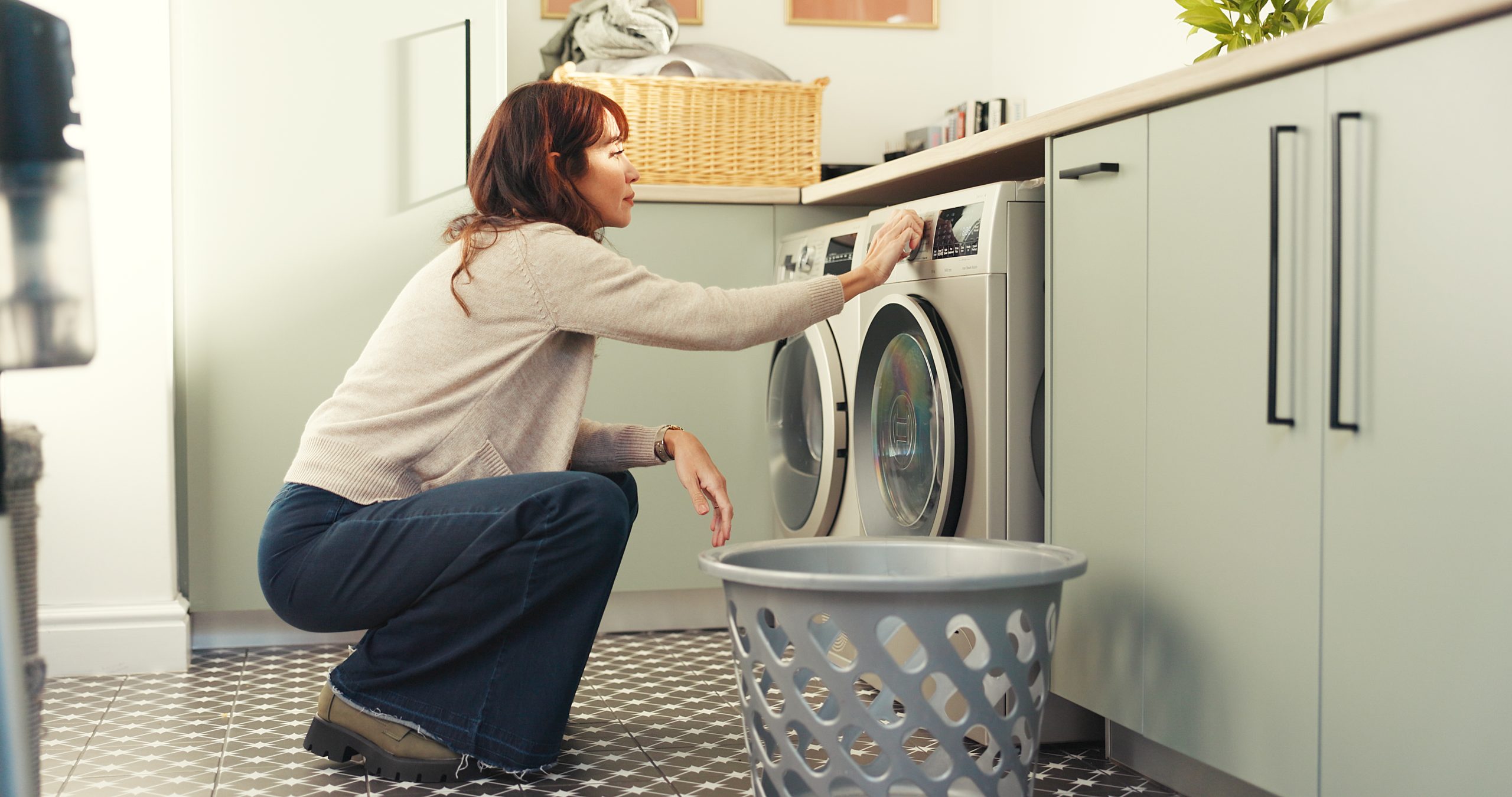
Your dishwasher is about to work harder than it has all year. Worth asking what it’s been drinking.
The coffee maker takes four minutes longer than it used to. The dishwasher returns glasses with a chalky film that definitely wasn’t there when you loaded them. The ice tastes faintly of freezer. The refrigerator dispenser has developed a slow, contemplative pour, like it’s thinking something over.
Most homeowners file all of this under “getting old,” which is also how most of us explain our own knees. Sometimes that’s the right answer. But in Middle Tennessee, a lot of it is a mineral problem wearing an appliance costume, and it tends to announce itself right around the time your kitchen goes into holiday overtime.
Here’s what’s actually happening inside those machines, what treatment can and can’t do about it, and how to tell the difference before you replace something that wasn’t broken.
The Limestone Underneath Us Is the Whole Story
Middle Tennessee sits on limestone. Water moves through it, picks up calcium and magnesium along the way, and arrives at your house carrying souvenirs. That’s hard water. The USGS classifies anything above 121 mg/L as hard, and above 180 mg/L as very hard.
Municipal systems here generally treat surface water in the moderate range, and they publish those numbers every year. Private wells across Rutherford, Williamson, and Montgomery counties routinely test higher. Two homes fifteen minutes apart can have genuinely different water, so your neighbor’s advice about their softener may or may not apply to you.
Hardness is not a health contaminant. The EPA handles it under secondary standards, which cover nuisance and technical issues rather than health risks. Nobody is in danger from calcium. Your appliances just have strong feelings about it.
What Scale Does Once It’s Inside the Machine
When hard water gets heated, dissolved minerals come out of solution and settle on the nearest available surface. That deposit is scale, and inside a kitchen appliance it does three unhelpful things: it insulates heating elements, it narrows passages, and it gives your detergent a second job.
Coffee makers show it first, because they heat small volumes of water over and over, every morning, forever. Scale lines the heating tube and the brew time stretches. Worth noting: the coffee gets worse before the machine does. If your morning cup has quietly gone flat over the past year and you’ve blamed the beans, the roaster, and possibly yourself, consider a third suspect.
Dishwashers have a different problem. Hardness minerals bond with detergent before the detergent can get anywhere near your lasagna pan, so part of every scoop is spent neutralizing the water instead of cleaning the dish. Those spots on your glassware are usually mineral, not food. You are, in effect, washing dishes and then lightly re-frosting them. The 2010 dishwasher detergent study funded by the Water Quality Research Foundation found that softened water improved spot and film performance and allowed for lower detergent doses, including on air-dry cycles rather than just heated ones.
Refrigerator dispensers and ice makers are mostly a flow problem. Narrow supply lines, small valves, and a solenoid that was never trained to negotiate with mineral buildup. Slow dispensing and hollow, cloudy ice are the usual opening symptoms. Cloudy ice won’t hurt anybody, but it does make an otherwise respectable bourbon look like it came from a gas station.
Faucet aerators are the canary. In the 2009 Battelle testing, faucet strainers running on unsoftened water were nearly plugged after the equivalent of 19 days of use. Nineteen days. If you’ve ever unscrewed yours and found something that looks like a tiny geological core sample, that’s the same material quietly accumulating in every place you can’t unscrew.
And the water heater feeds all of it. That same Battelle testing found gas storage water heaters on softened water held their original factory efficiency rating across a simulated 15-year lifespan, while hard water produced steady efficiency loss. Tankless units fared worse, failing from scale blockage after the equivalent of 1.6 years on very hard water.
One caveat worth saying out loud: that research was funded by the Water Quality Association’s research arm, which is an industry group. The testing itself was independent and the findings line up with older DOE-era work on scale and heat transfer, but you should know who paid for the study. We’d rather tell you now than have you discover it later and wonder what else we skipped.
The Distinction Most Companies Skip
Here’s where marketing in our industry gets sloppy, ours included on a bad day.
Filtration and softening are not the same thing, and appliance scale is mostly a softening problem.
Carbon filtration handles chlorine, chloramine, sediment, and the taste and odor issues that make water unpleasant. It does an enormous amount for how your water tastes in coffee, in tea, in soup stock, and in ice. It does not remove hardness minerals. No amount of carbon will talk calcium into leaving.
Softening uses ion exchange to swap calcium and magnesium out of the water, which is what actually addresses scale. Salt-free conditioning takes a different route. It doesn’t remove the minerals, but it can change how readily they stick to surfaces, which suits some homes and hardness levels better than others.
Most Middle Tennessee kitchens do best with a combination. Filtration for what you taste, hardness treatment for what your appliances feel. Anyone who tells you one box solves both without looking at your test results is selling, not diagnosing.
The Part You Can Do This Weekend, Free
Before anyone installs anything, there’s maintenance worth doing no matter what you decide about treatment:
- Descale the coffee maker. White vinegar through a brew cycle, then two cycles of clean water. Monthly in hard water, quarterly otherwise. Your house will smell like a salad for twenty minutes. Small price.
- Unscrew and soak the faucet aerator. Vinegar, twenty minutes, an old toothbrush. It’s the cheapest flow-rate improvement available to a human being.
- Check the dishwasher filter. Bottom of the tub, twists right out. Most people have never met theirs. It’s going to be worse than you think.
- Flush the water heater per the manufacturer’s instructions, or hand that one to a plumber and go do something you enjoy.
Do all four, and if the symptoms come back within a few months, that’s genuinely useful information. It means the water is rebuilding the problem faster than you can clean it up, which is the point where treatment stops being a nice idea and starts being math.
Equipment That’s Been Tested, Installed by People Who Live Here
We install systems from several manufacturers, including A. O. Smith, Hague, and our own in-house Family Water systems. Which one ends up in your basement depends on what your water test says, not on what we’re hoping to move this month.
That’s the practical case for buying from a dedicated water treatment professional. A system has to be sized to your household’s actual demand, and it has to be loaded with the right filtration media for the contaminants actually present in your water. Get either one wrong and you’ve bought an expensive appliance that solves a problem you never had while leaving the one you do have completely untouched.
The local part matters after the install. We know Middle Tennessee water because we test it every week, and we’ll still be here in three years to answer the phone when you have a question about your system.
Common Questions
Will a water softener make my dishwasher last longer? It can help by reducing scale accumulation, and the research supports meaningful efficiency preservation in water heaters specifically. We won’t put a number of years on your particular dishwasher, because usage, model, and starting hardness all matter, and because anyone who does is guessing with confidence.
Does a refrigerator filter protect the ice maker from scale? Generally no. Most fridge filters are carbon-based and built for taste, odor, and certain contaminants, not hardness. Scale in the line is a separate conversation.
Is reverse osmosis worth it for coffee and ice? Plenty of people think so, and taste is a legitimate reason to buy something. RO at the kitchen sink gives you filtered water for drinking, cooking, coffee, and ice without treating the whole house. It’s a point-of-use solution, not appliance protection for the laundry room.
My water is only moderately hard. Does this apply to me? Moderate hardness still deposits scale, just at a more leisurely pace. The Battelle data showed efficiency loss scaling with hardness rather than switching on at some threshold. Whether it’s worth treating depends on your numbers and on how much the spots bother you.
Can I just use more detergent? You can, and a lot of people already are without having decided to. You’re paying detergent to fight your water instead of your dishes, and it does nothing at all about the scale inside the machine. It’s a workaround, not a fix.
Start With Your Numbers, Not Our Opinion
There’s no single answer for Middle Tennessee kitchens, because there’s no single Middle Tennessee water. A home on a Rutherford County well and a home on municipal supply in Franklin are two different conversations with two different pieces of equipment at the end of them.
A free in-home water test takes about twenty minutes. You get your hardness number, we explain what it means for the appliances you actually own, and you get a quote you’re welcome to sit on until whenever.
No countdown clock. No three-hour presentation with a binder. No pretending a softener removes something it doesn’t.
Schedule your free in-home water test or take a look at our whole home water treatment solutions to see what fits your house.
Related Posts
The Ultimate Guide to PFAS and Microplastics in Middle Tennessee Water
Two contaminants have taken over the water conversation so here’s The Ultimate Guide to PFAS and Microplastics in Middle Tennessee Water
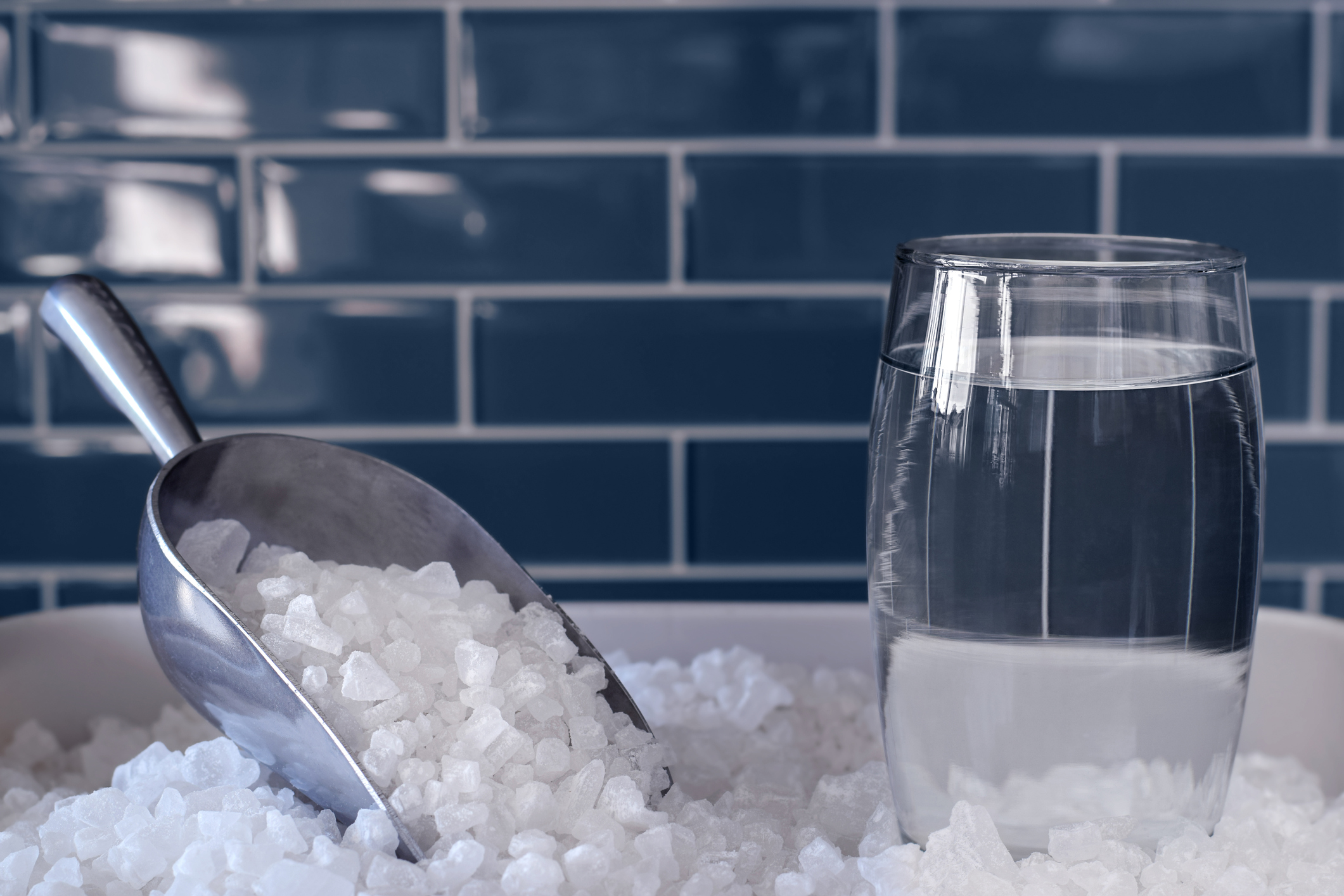
What Type of Salt Should I Use in My Water Softener?
Not all water softener salt is the same. Learn which salt protects your system and which types cause bridging, residue, and resin damage.
The holidays are here and what better time to brush up on your hosting skills?! Secure your title as the best host this Christmas with these 5 tips! (Spoiler alert: these tips are good all year long, so be sure to take notes or bookmark this blog for future reference!)
1) Prepare a welcome basket for your guests!
Make your home feel a little more like your guests’ own with a welcome basket! Stock it with toiletries such as toothbrushes, toothpaste, shampoo, and conditioner, a magazine or two, a card with your wifi information, and maybe even their favorite Christmas candy! This is such a fun, festive way to welcome your guests into your home.
2) Make everyday items easy to find in your home!
While you might know where everything in your house is, your guests probably don’t! No one wants to snoop around your cabinets and drawers just to find some scissors. Go through your day and think about all of the household items you use on a regular basis, then make sure those items are easily accessible for your guests!
3) Prepare your food ahead as much as you can!
As easy as procrastination can be, preparation is key to being a better holiday host! With guests to entertain, your own family to take care of, and meals to cook, it’s easy to get bogged down in the to-do’s in the moment! That’s why committing to cleaning, chopping, and additional food prep ahead of time will help free up some much-needed time as you host!
4) Treat your guests to cleaner, healthier water!
Water is probably the most utilized resource throughout your entire home. From showers and baths to dinner dishes and delicious seasonal drinks, you and your guests will be using your water the duration of their stay. Make sure that yours is clean, safe, and healthy for all with a whole-house water filtration system! Not only will your guests thank you, but so will your family all year long! Enjoy healthier skin and hair, longer appliance life spans, brighter whites in the laundry, a lowered toxin burden, and more with a system! Learn more now by scheduling an appointment with one of our local water experts!
5) Give yourself some grace!
This might be the most important time we have. Hosting during the holidays can be stressful, so be sure to cut yourself a little slack! Your list might not get completely checked off, you might be a casserole, and you might have to run to the grocery store more than once, but remember that you are doing a great job and your guests are having a great time, no matter how overwhelmed you may feel! You can do it!
From welcome baskets to gifts of grace, we hope that you found these 5 tips helpful as you prepare to host this holiday season! If you are interested in learning more about how a whole-house water filtration system can be a gift for you, your family, your guests, and your home, schedule an appointment with us by clicking below! Hosting or not, we would be honored to help bring better water to your home this holiday season!
Hosting Thanksgiving or Friendsgiving this year? You’ve triple-checked the guest list, ironed the tablecloths, and prepped Grandma’s stuffing recipe, but have you considered the water coming out of your tap?
It might sound minor, but water quality can make or break the flavor of your food and drinks. From flat-tasting coffee to funky-tasting pasta water, poor water can sabotage your best dishes.
Let’s break down how to protect the taste of your holiday table from the top down, starting with what’s in your glass (and your pot, and your stock…).
Why Water Quality Impacts Taste
Water isn’t just a background ingredient; it’s often the main ingredient. Whether you’re boiling, baking, or brewing, if your water tastes like a chemistry experiment, your food will too.
Common Offenders in Tap Water:
- Chlorine – Adds a pool-water aroma to soups, sauces, and drinks.
- Hard Water Minerals (like calcium and magnesium) – Can leave a bitter, metallic aftertaste and mess with your bread rise.
- Sediment or Rust – No one’s asking for a side of iron oxide with their green bean casserole.
Clean water enhances the natural flavors of your ingredients. Dirty water dulls them or worse, alters them entirely.
The Holiday Menu Breakdown: Where Water Plays a Role
Here’s where clean water really struts its stuff on the holiday table:
1. Coffee & Tea
Using tap water for your post-feast coffee? Don’t. Minerals and chlorine kill the flavor. Clean, filtered water lets your beans and leaves shine.
2. Soups & Stocks
From turkey bone broth to butternut squash bisque, water is the base. Better water = richer, cleaner taste.
3. Boiled Veggies & Pasta
Hard water can toughen your green beans and affect pasta texture. Yes, even macaroni deserves clean water.
4. Baking Bread or Rolls
Chlorine can interfere with yeast, making your bread less fluffy and more “meh.”
5. Cocktails & Ice Cubes
Ever had a cocktail that tasted like tap? Not on your watch. Filtered water makes crisp ice and clean mixers.
Your Secret Ingredient? Clean Water.
We won’t crash your party with a sales pitch, but we will say this: If your water tastes off, it’s not your cooking, it’s your tap.
Family Water installs whole-home water filtration systems that:
- Remove chlorine and chemical contaminants
- Eliminate scale-causing minerals
- Make every drop taste fresher, smoother, and yes—more holiday-worthy
We’re the trusted local installers for Aquasana, the nation’s #1 direct-to-consumer filtration brand (backed by AO Smith). Translation: Big-league tech, hometown care. So if you’re prepping a feast and want it to taste its best, from cranberry sauce to coffee, we’re your flavor-saving sidekick.
Ready to make this your best-tasting holiday yet? Schedule your free in-home water test today. (No hard sell, no weird pressure—we’ll leave that to your extended family.)